
If you have room for one culture-heavy stop in Oslo, make it this one. Norsk Folkemuseum is a walk through Norwegian daily life — historic homes, farmyards, a city street, craft traditions, and a medieval stave church — spread across a green hillside on Bygdøy, about 5 km from the centre.
Around 160 buildings have been moved here from across the country, spanning the Middle Ages to the 20th century. One minute you’re looking into a turf-roofed farmhouse, the next you’re on a street lifted out of another era of Oslo.
It was founded in 1894 and absorbed King Oscar II’s Collection, established at Bygdøy in 1881 and widely described as the world’s first open-air museum. Historically important, then — but also, unusually for a museum of this kind, genuinely enjoyable.
|
Where |
Museumsveien 10, Bygdøy — about 5 km from the centre |
|
Getting there |
Bus 30 to Folkemuseet, or the seasonal ferry to Dronningen plus a 10-minute walk |
|
Opening hours |
1 May – 4 Oct: daily 10:00–17:00 | 5 Oct – 30 Apr: Tue–Sun 11:00–16:00 |
|
Admission |
220 NOK adult · 100 NOK ages 6–17 · under 6 free · free with Oslo Pass |
|
Online booking |
10% cheaper on norskfolkemuseum.no |
|
Time needed |
3–4 hours in summer; 2 if you’re selective |
|
Buildings |
Around 160, from the Middle Ages to the 20th century |
This is Norway’s national museum of cultural history and one of Europe’s largest open-air museums. It was built to show how people here have lived from roughly the 16th century onward, through exhibitions, archives, objects and — most memorably — full-scale buildings relocated from across the country.
The outdoor part splits into three areas: King Oscar II’s Collection, the Countryside, and the Old Town. That layout is the point. Instead of explaining Norway through glass cases, it lets you walk through regional architecture, family life, craft, religion and urban development on your own feet.
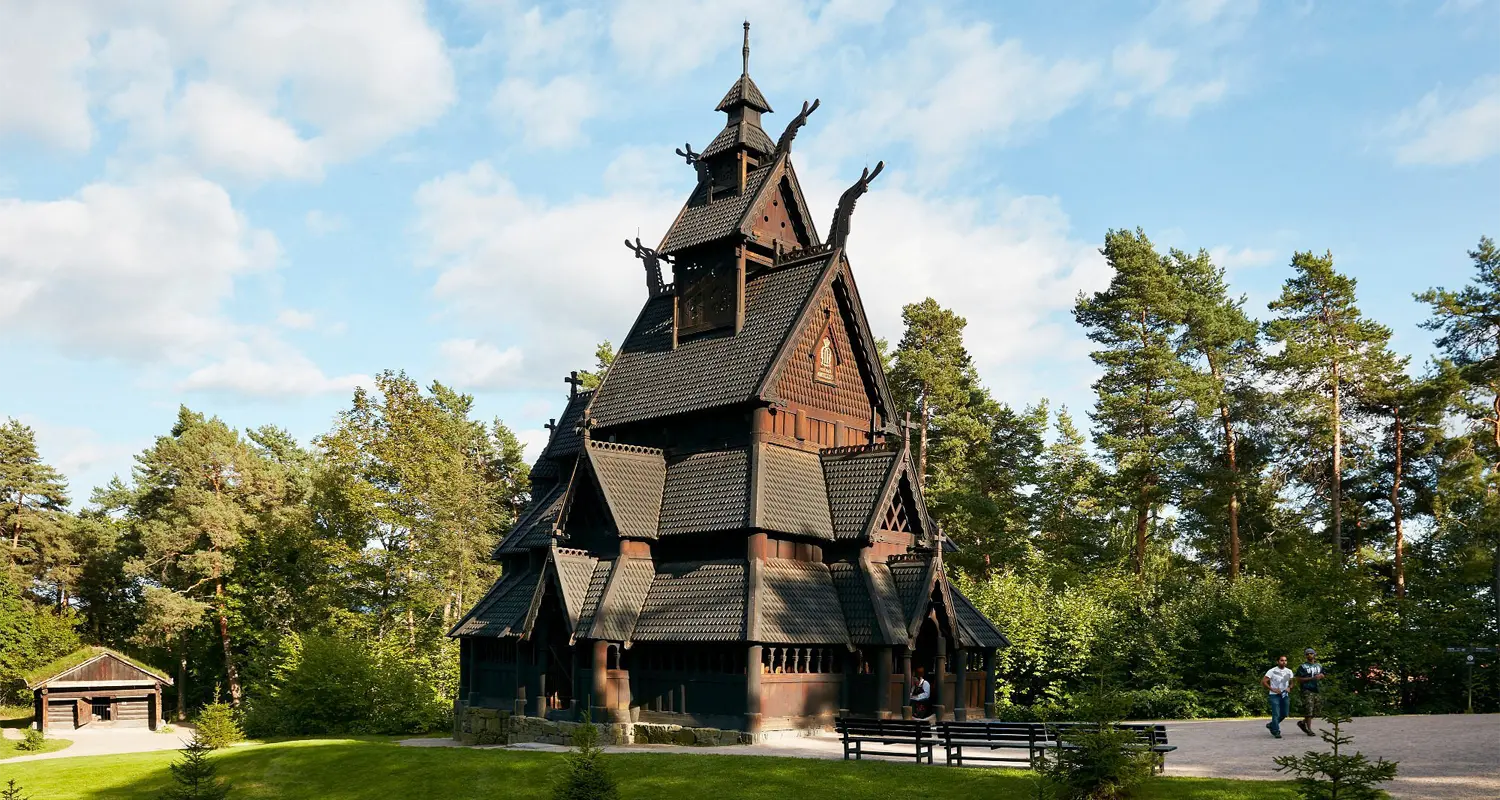
For most visitors this is the first reason to come, and fair enough. It dates from around 1200 and belongs to the small surviving group of Norway’s stave churches.
It originally stood in Gol in Hallingdal. When it faced demolition in the 1880s, the Society for the Preservation of Norwegian Ancient Monuments bought it and re-erected it here with King Oscar II’s backing.
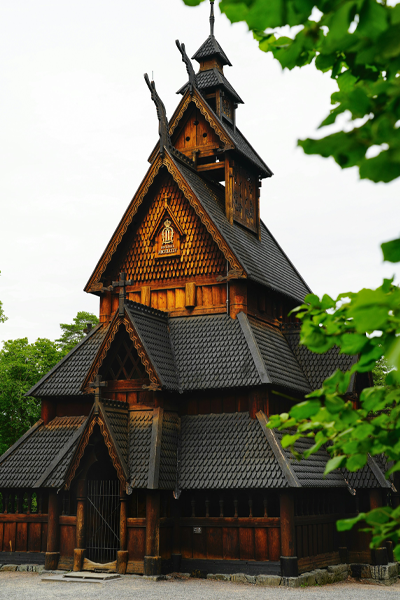
The lesser-known part: much of the exterior reflects that 1880s restoration, modelled on Borgund Stave Church, while key structural timbers inside are still medieval. So you’re not just looking at an old church — you’re looking at preservation history, and at Victorian ideas about what a medieval church ought to look like.
There’s plenty to notice. The carved portals with dragon and plant motifs. The way light slips in through small high openings. Give your eyes a minute and you may pick out carved heads near the tops of the staves.
There are also medieval runic inscriptions inside, including one usually translated as “Kiss me, because I struggle.” That single line does more for the atmosphere than a dozen information panels.
Don’t treat the church as the whole visit. Some of the 160 structures are simple log houses; others are storehouses, barns, workshops, urban apartments or complete farmsteads, showing how regions developed differently depending on climate, landscape and local tradition.
The Setesdal farmstead is a favourite — a row farm from a valley known for holding onto old traditions in dress, music, poetry and building. You see open-hearth houses, yard-facing galleries, and homes shaped by weather, farming and isolation. It’s where the practicality of Norwegian building becomes obvious.
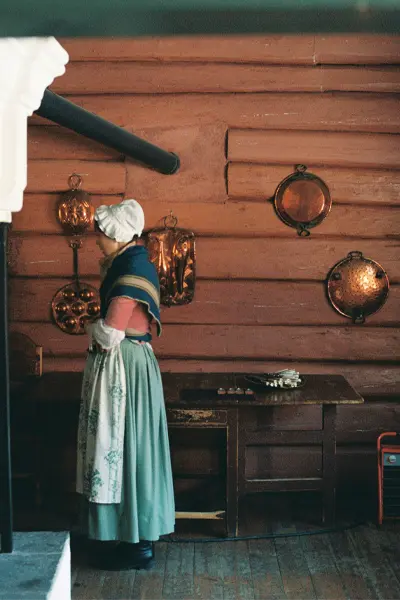
Here the museum shifts from rural Norway to city life: streets and building fronts from Oslo and nearby towns, showing how urban living changed.
The standout is the apartment building at Wessels gate 15, where flats from different periods show how Oslo residents actually lived from the late 1800s into the early 2000s. This is where it gets unexpectedly personal. The rooms don’t feel like abstract history — they feel like lives paused mid-sentence.
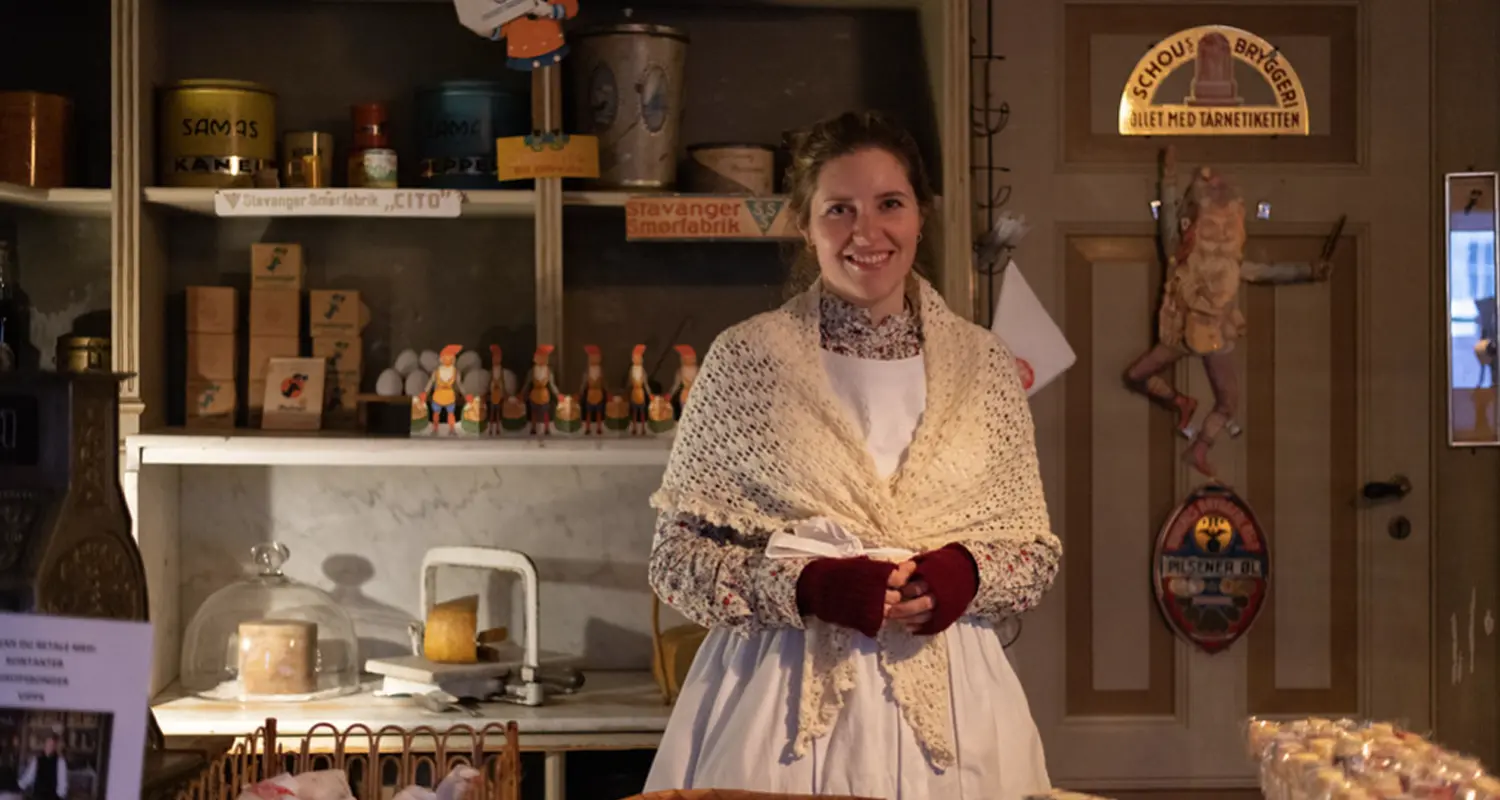
Open year-round, but the experience changes with the season. Summer is when the site feels most animated: daily activities, folk dancing, craft demonstrations, costumed staff working the houses.
Busier, too. If you’d rather have quiet corners and atmosphere around the stave church, the shoulder season and winter are excellent — with the trade-off that some outdoor buildings are closed and the activity programme thins out. The indoor wings stay open all year.

Budget more time than you think. Three to four hours in summer, and you can fill a day. It looks manageable on the map, but once you start opening doors, reading signs and detouring toward one more farmhouse, the time goes.
Wear proper shoes and bring a layer. Most of it is outdoors, on gravel paths with some steeper ground, and there’s a breeze off the fjord even on warm days.
Check the programme first. Guided tours, folk dancing and craft demonstrations change by day and season, and they make a real difference to the visit.
Buy online. It’s 10% cheaper than at the gate, and it saves queueing on summer weekends.
Good with kids. One of the easier history stops in Oslo, because there’s room to move rather than just stand still.
Combine carefully. The Fram Museum, Kon-Tiki and the Maritime Museum are all walkable from here. Two Bygdøy museums in a day works well. Three starts to feel like a route march.
Yes — because it gives you several versions of Norway at once. Architecture, social history, craft, religion and domestic life folded into one landscape. And it works even if you’re not a museum person: come for the stave church, stay for the houses, leave remembering one small domestic detail in a farmhouse window or a city kitchen.
For a first visit to Oslo it offers context that most other sights don’t. It shows how Norwegians built, cooked, dressed, worked, worshipped and adapted over time — how ordinary life becomes history, and how much personality survives in wood, tools, textiles and rooms.
If your Oslo list has room for one place where you can step into a medieval church, wander historic homes, learn something real about Sámi and Norwegian culture, and still finish with coffee and Bygdøy greenery — this is it.
Give it half a day if you can. Go slower than you think you need to. And at the stave church, don’t rush. Let your eyes adjust. Look up. Read the wood.
Local tip: if the weather holds, finish with a swim at Huk or Paradisbukta. Both are a short walk from the Bygdøy museums, and it’s what people who live here actually do with a warm afternoon.
Tips-based: free to join, and you decide at the end what it was worth.