Oslo has a summer habit that catches first-time visitors off guard. One minute you’re walking past glass towers on the waterfront, the next you’re stepping around people in swimsuits heading from the office straight into the fjord.
The beaches here aren’t somewhere outside the city. They are the city — seawater pools, sandy stretches, warm rocks, and islands twenty minutes from the town hall.
A local tip before you start: don’t agonise over which one is best. Pick by mood. Quick swim on a lunch break, full beach day, island escape, quiet afternoon with a book — there’s a spot for each.
The season is short. Serious swimming starts in mid-June and runs to late August. Before that the water is cold enough to hurt; after that it drops away quickly. Roughly ten weeks, and Oslo uses every one of them.
Surface temperatures in the inner fjord run from about 17°C in June to 22°C in July. Shallow sandy bays hold heat better — the shallows at Langøyene can hit 23–24°C on a good July day, which is warm by any standard and startling for this latitude.
| Fjord water | Fjord water | What it feels like |
|---|---|---|
Late May – early June |
12–16°C |
Brave locals only |
Mid-June |
16–18°C |
Season properly starts |
July |
19–22°C |
Peak — genuinely pleasant |
Early August |
19–21°C |
Still good |
Late August |
Cooling fast |
Short swims |
The water is clean, and it’s measured. Oslo Kommune tests bathing water quality and temperature at public beaches from June to August and publishes the results. The inner fjord was badly polluted in the 1960s and 70s; decades of sewage investment fixed it, and it now meets EU bathing standards.
One local rule stands: don’t swim for about 24 hours after heavy rain, when runoff pushes bacteria levels up. If it has poured, check the published result before you get in.
| Spot | Type | Getting there | Best for |
|---|---|---|---|
Sørenga |
Seawater pool + decks |
Walk from Oslo S, 15 min |
Diving, socialising, all day |
Operastranda |
Sand |
Next to the Opera House |
Families, quick swims |
Tjuvholmen |
Small city beach |
Walk from Aker Brygge |
Dip and go, then a café |
Huk |
Sand + grass |
Bus 30 to Bygdøy |
The classic beach day |
Paradisbukta |
Sand, rocks, shade |
Bus 30, then forest path |
Quieter alternative to Huk |
Hovedøya |
Rocks + grass |
Ferry B1, under 10 min |
Swimming with monastery ruins |
Langøyene |
Best sandy beach |
Ferry B2, ~30 min |
Full day, warmest water |
Hvervenbukta |
Sand, grass, café |
Bus south of the centre |
Relaxed family day |
Katten |
Sand + rocks |
Bus / train south |
Calm water, small kids |
Bekkelagsbadet |
Piers, diving platforms |
Bus south of the centre |
Urban swim, no sand |
If you don’t want to plan, don’t. Three spots are within walking distance of the middle of town.
Sørenga is the big one — wooden decks, a seawater pool, diving spots, room to spread out. Social, busy, and very Oslo. It fills up fast on sunny days.
Operastranda sits right beside the Opera House and actually has sand, which is rare this close to downtown. Good for families and easy swims.
Tjuvholmen Bystrand is smaller and more polished. A quick dip, some sun, then back to the galleries and cafés. More dip-and-go than all-day beach.
Everyone knows about these three. That’s the trade-off, and it’s also the point — they’re built for spontaneity, not for planning.
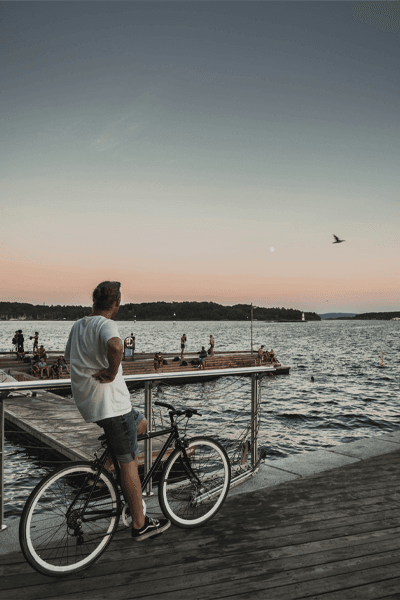
Huk is the one people picture. Sand, grass, plenty of room. It gets busy, and locals keep going anyway. Bus 30 from the centre.
Paradisbukta is quieter and, honestly, nicer. A short walk through the forest and everything slows down — sand, rocks, shade, calmer water. If Huk is the crowd favourite, this is the insider tip.
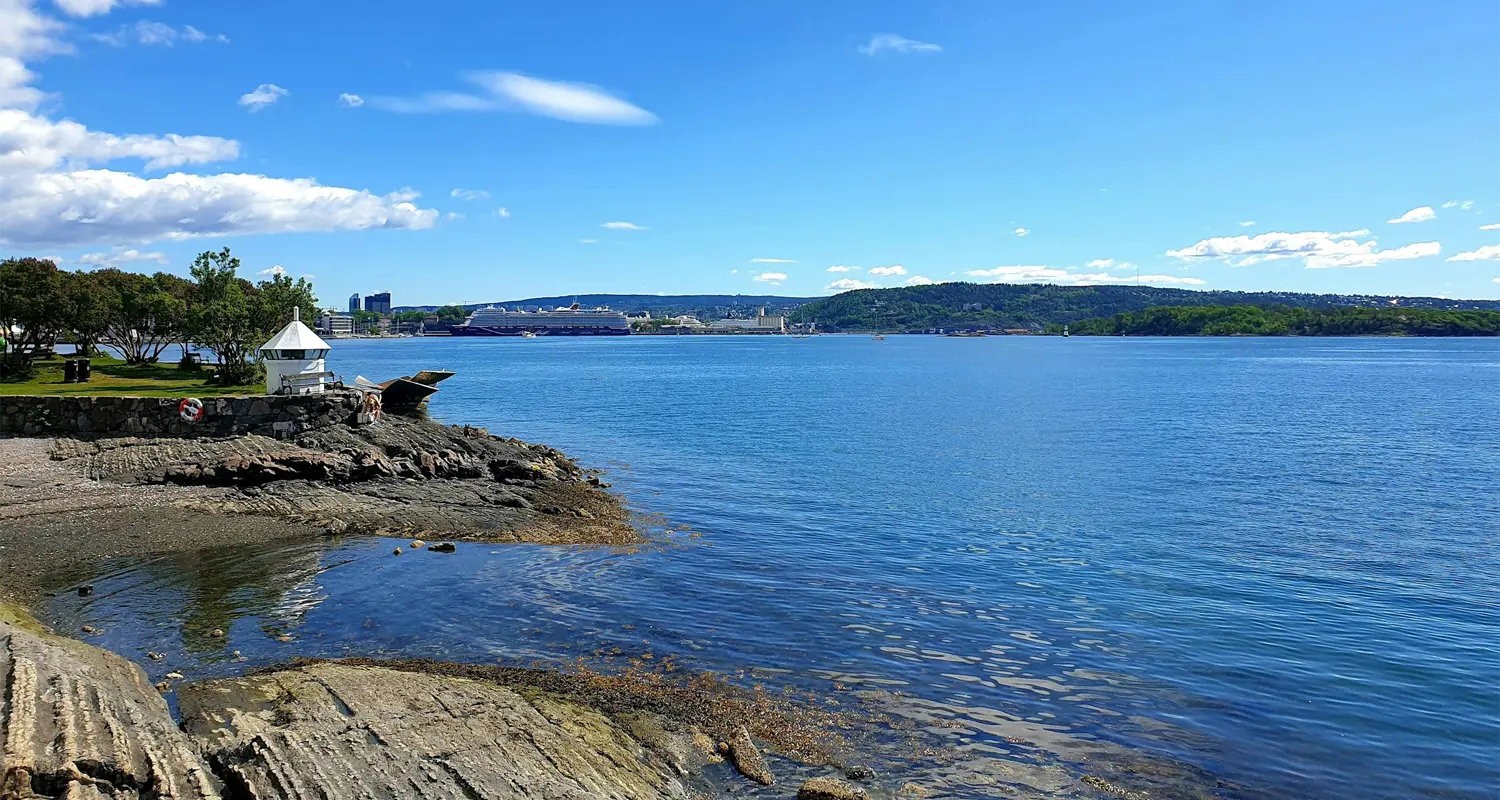
The two islands worth knowing for swimming specifically:
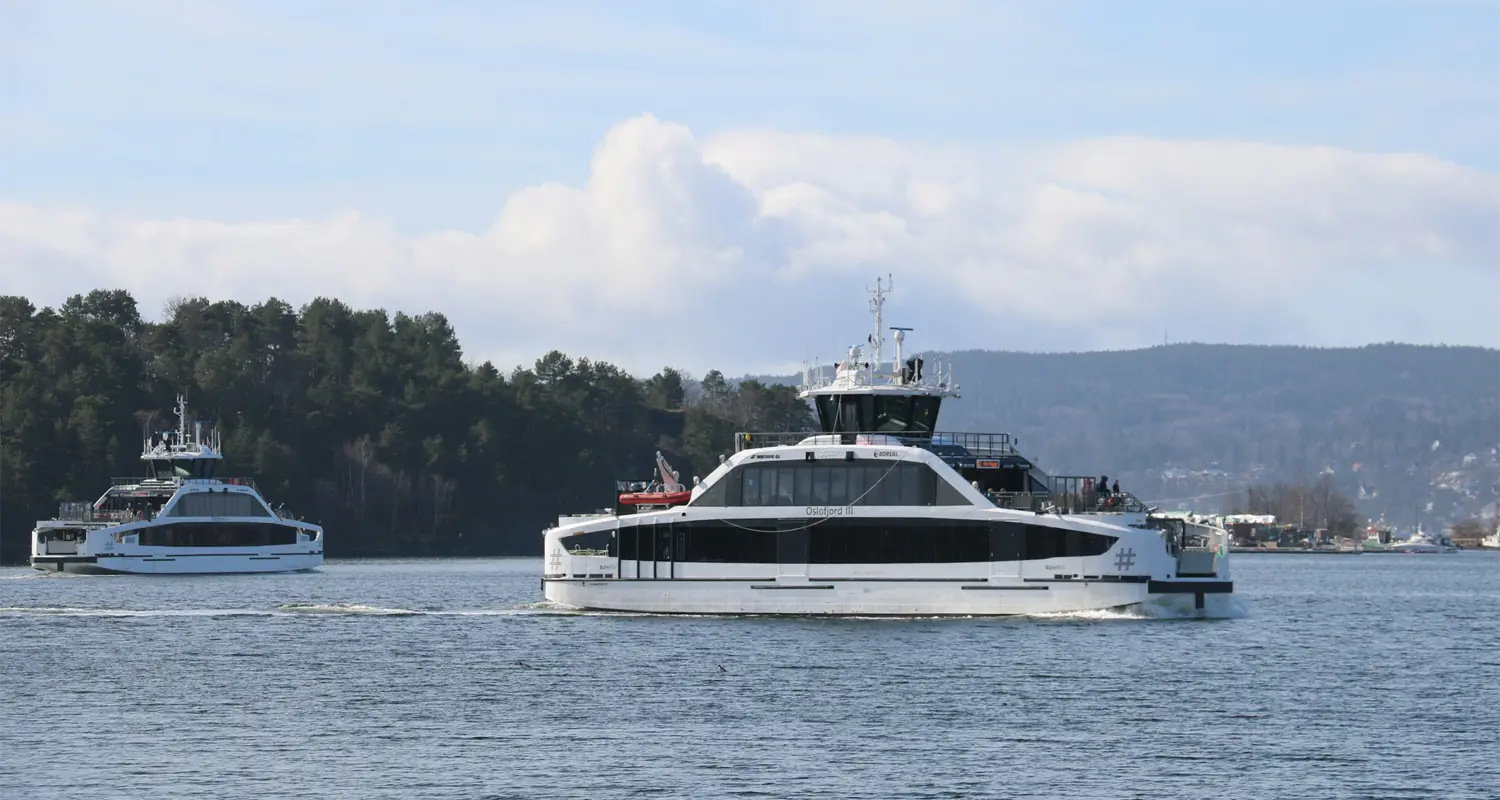
Hovedøya is the easy one — under ten minutes on ferry line B1 from the City Hall piers. Rocks, grass, good swimming, and 12th-century monastery ruins to wander through afterwards.
Langøyene has the best sandy beach in Oslo and the warmest water, around thirty minutes out on line B2. The sandy bottom is why the shallows get so warm.
The ferries run on a normal Ruter ticket. No boat supplement, no separate fare. If you already have a day pass, the crossing costs nothing extra.
A word on Langøyene’s history, since it comes up: the channel between what were once two separate islands served as a landfill in the first half of the twentieth century, and was later covered over. In 2013 waste resurfaced and contaminants were found leaching into the fjord. The city capped the whole area with a clay barrier and around 600,000 tonnes of clean soil, sand and gravel, finishing the work in the early 2020s. The sand you lie on now was put there deliberately.
Gressholmen, Lindøya, Nakholmen and Bleikøya are the quiet ones — colourful cabins, narrow paths, small swimming spots you find by wandering. And one rule for all of them: check the last ferry back before you settle in.
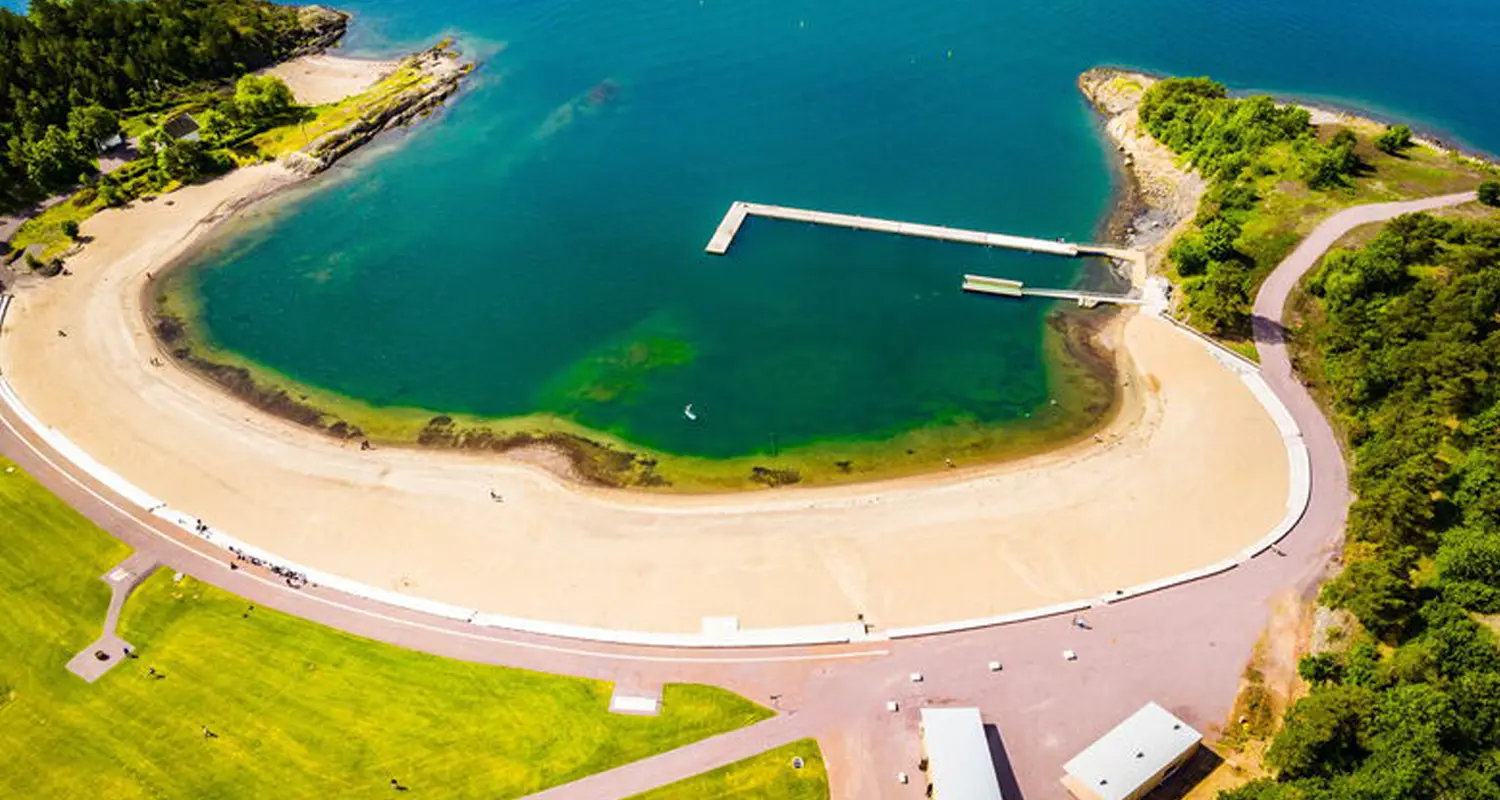
Hvervenbukta is the standout — sand, grass, rocks and a café, relaxed and family-friendly without the crush.
Katten works especially well with kids: easy access, calm water, a mix of sand and rock for long afternoons.
Bekkelagsbadet is the modern option — diving platforms and piers rather than sand, with a distinctly urban feel.
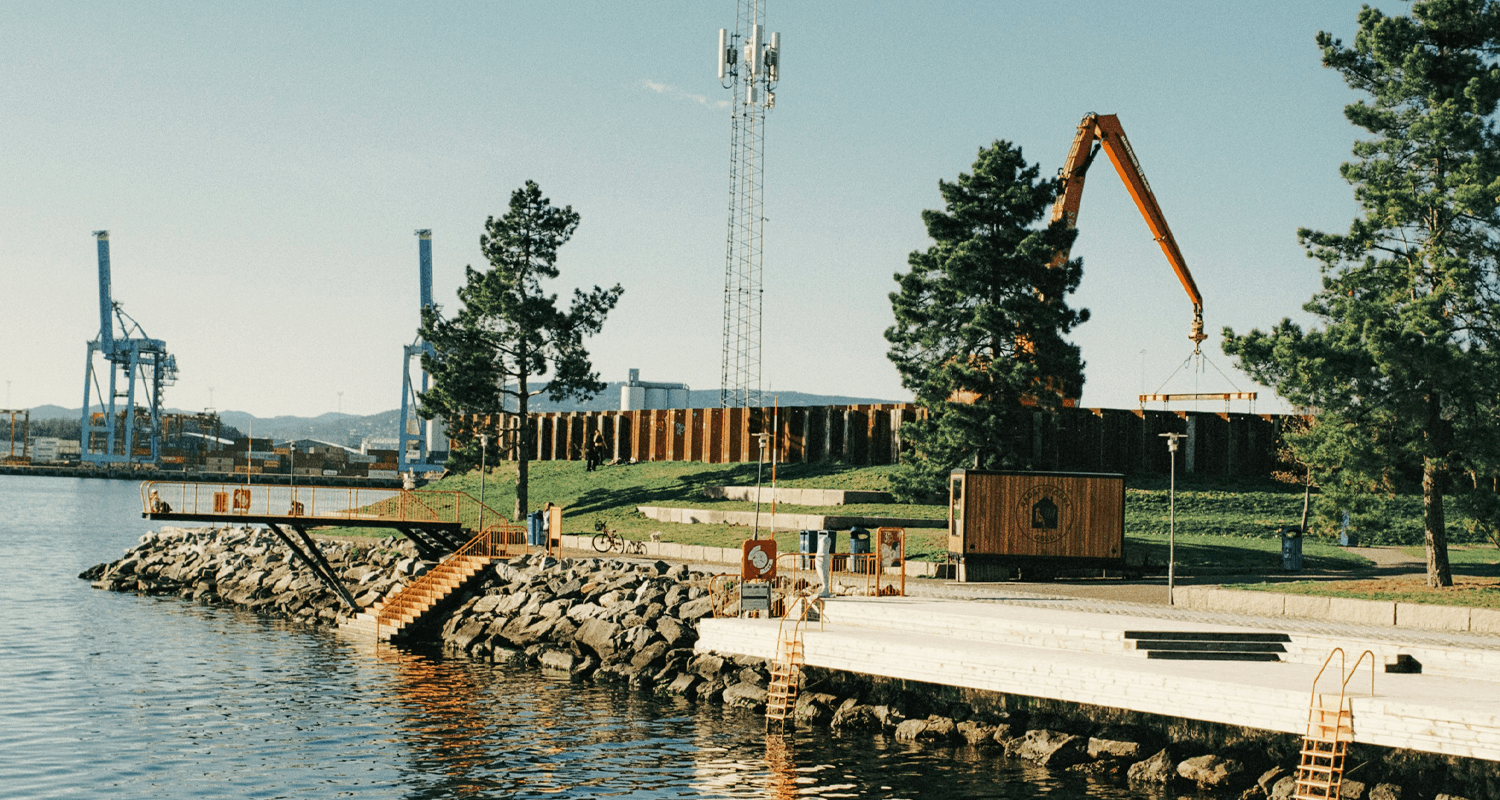
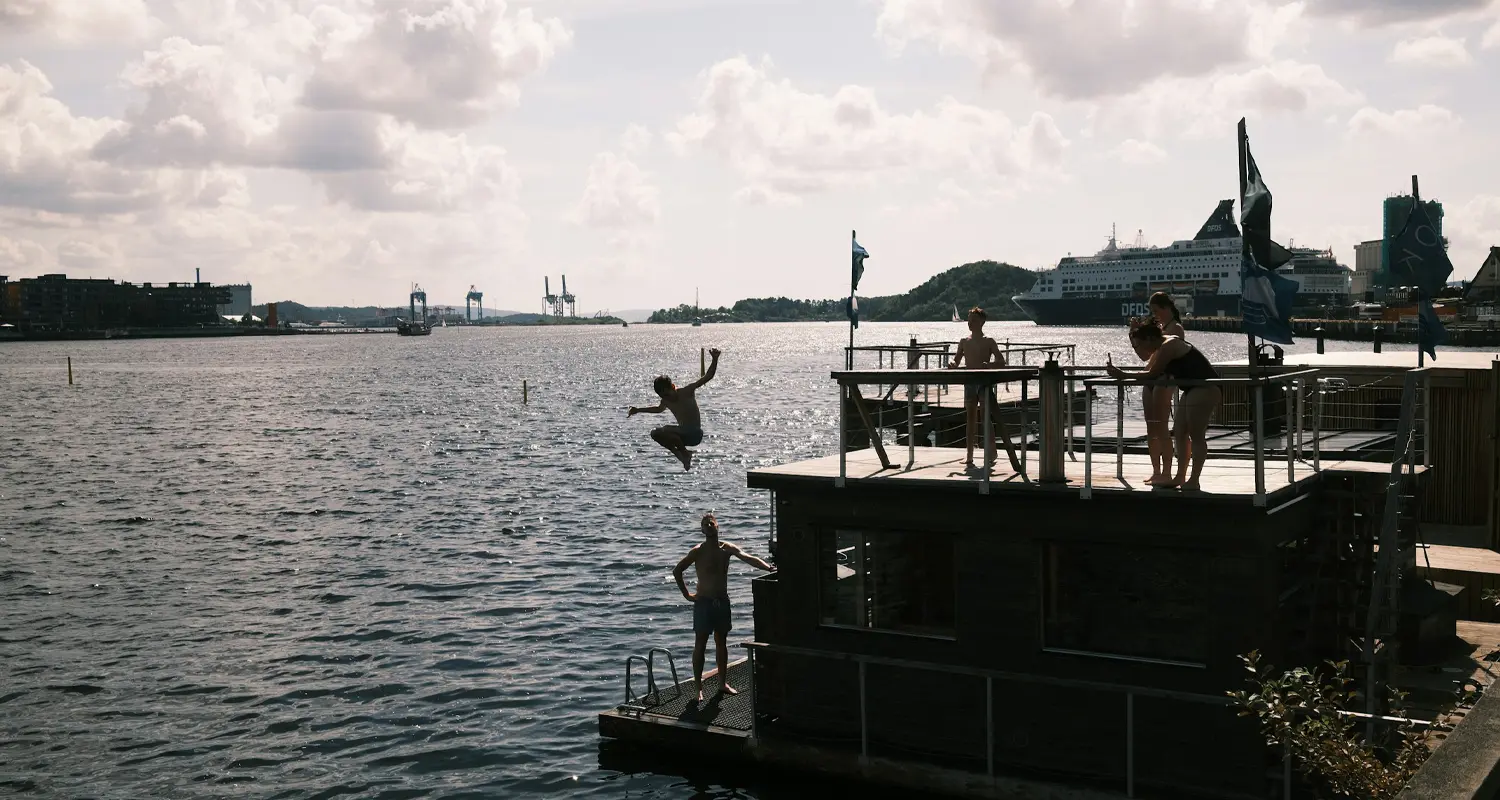
If you’ve walked along the harbour and wondered about the wooden huts floating in the water with people leaping off them, that’s the other half of how Oslo swims.
Floating saunas sit at several points along the waterfront, and the routine is simple: get hot, jump in the fjord, get hot again. It works in July and it works in February, which is why locals treat it as a year-round thing rather than a summer one.
Most operate on booked sessions, some sell drop-in places when there’s room, and prices vary by operator and time slot. Book ahead on warm weekends.
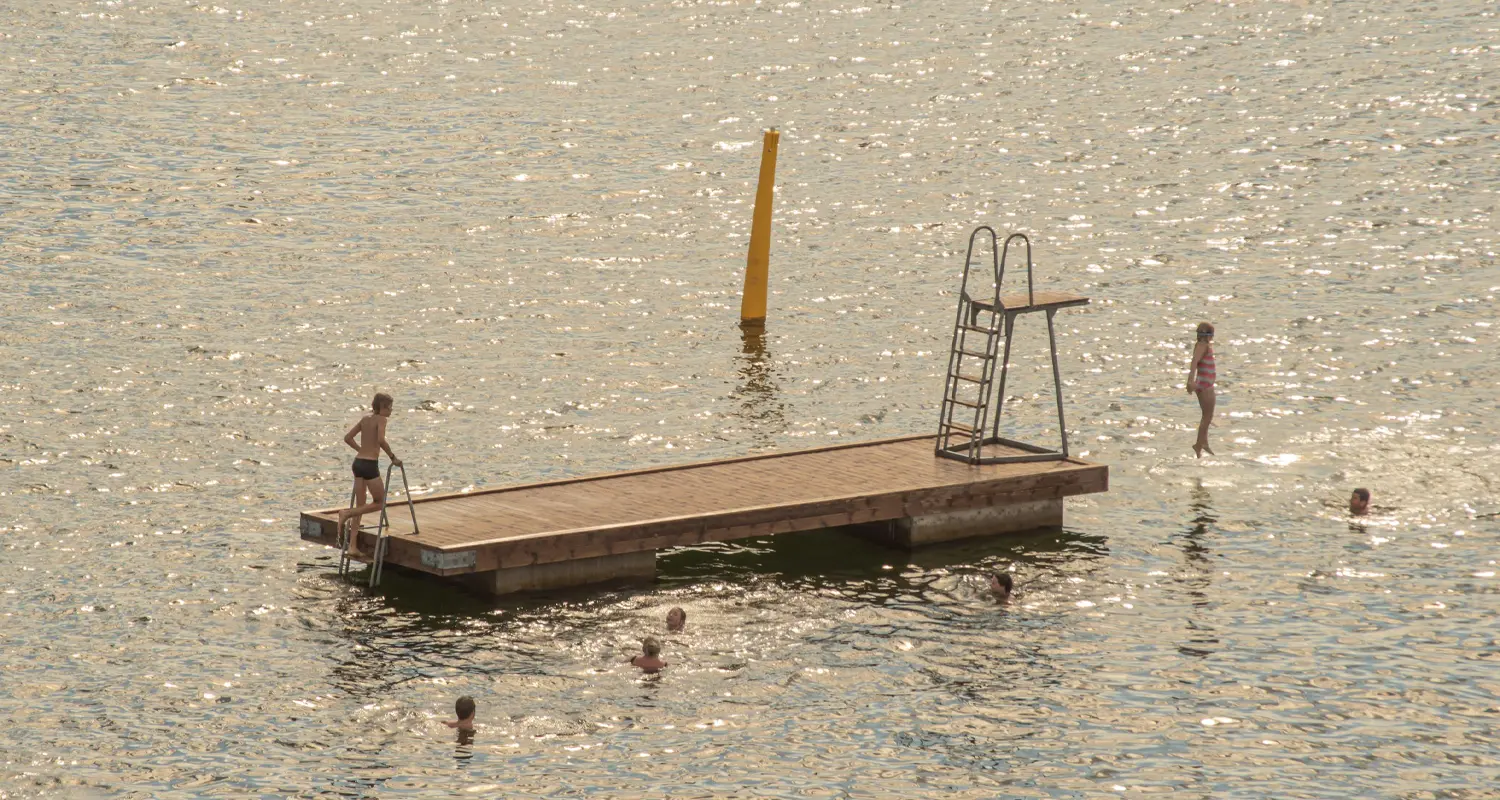
Locals rotate between the fjord and the forest lakes depending on mood, and lakes are usually a degree or two warmer because they’re shallower and sheltered.
Sognsvann is the easy one — metro line 5 to the end, a walking loop around the water, plenty of places to get in.
Nøklevann is quieter, deeper into the forest, and a genuine local favourite.
Lutvann feels the most remote of the three despite being reachable by public transport. Clear water, forest all around, and the best entry point is at the northern end where there’s a small beach.
Fires and barbecues. Norway has a general open-fire ban from 15 April to 15 September, which covers grills in forests, nature areas and many beaches by default. Designated grill areas and some urban waterfront spots are fine. In very dry spells the city can impose a total ban even where grilling is normally allowed — check before you pack the disposable barbecue.
What to bring. Pack for two temperatures: sun on your face in the water, cold air the moment you get out. Swimwear, towel, water shoes for rocky entries, sunscreen, and a warm layer. For island days add a charged phone, your ferry ticket, and more food than seems necessary — kiosk prices start looking reasonable when you’re hungry.
What makes swimming here work isn’t the scenery. It’s that it slots into an ordinary day — a swim between two museums, a ferry ride, a picnic, a sunset walk, without ever really leaving town.
So if the forecast turns and your schedule has a gap, do the local thing. Grab a towel and go.
Most visitors find the fjord makes more sense once they understand how Oslo grew around it. That’s a lot of what we cover on our free walking tour — 90 minutes, daily, meeting by the Tiger statue outside Oslo Central Station.
Tips-based: free to join, and you decide at the end what it was worth.