
If you ask ten Oslo locals what visitors absolutely should not skip, Vigeland Park comes up fast. And yes — it’s a genuine local hangout. You’ll often see us here on a walk with a coffee in hand, or out jogging with the dog.
The funny thing is that it can sound a little intimidating before you go. More than 200 sculptures? An entire park designed around naked human figures? A giant stone column with bodies climbing into the sky? It all reads as slightly dramatic on paper.
In real life it’s one of the easiest places in the city to enjoy. It’s open all year, free to visit, and it somehow works whether you’re into art, photography, city walks, or just want a very good reason to spend an hour outside.
What makes this place special isn’t the number of sculptures. It’s that the whole thing feels like one enormous artwork rather than a random collection of statues.
Gustav Vigeland shaped the overall layout and architectural expression himself. The work was mainly installed between 1940 and 1949, but it was the result of more than 40 years of ideas, sketches, revisions and obsessive artistic ambition. You’re not looking at a park that acquired some sculptures. You’re looking at a single mind’s plan, executed at enormous scale.
It receives well over a million visitors a year, and it still doesn’t feel like a tourist trap — because Oslo actually uses it.

A lot of visitors think this is a separate place. That’s only half true.
Technically, the sculptures are an installation inside Frogner Park, one of Oslo’s most famous green spaces. Many locals still say Frognerparken, while most travellers say Vigeland Park or
Vigeland Sculpture Park. So if you get different names from different people, don’t panic — you’re still going to the right place.
The installation includes works in bronze, granite and wrought iron, all by Gustav Vigeland.
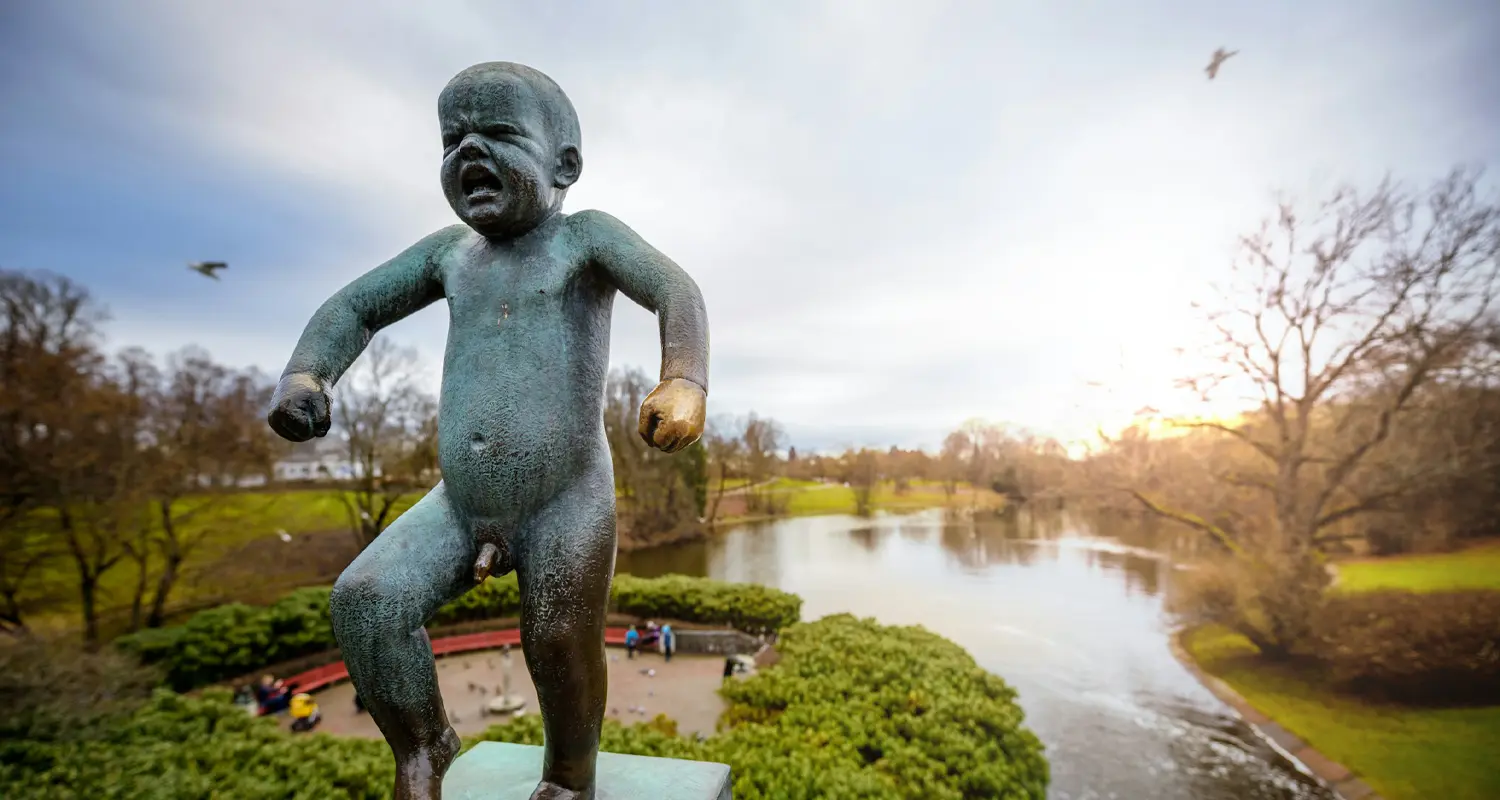
Most people rush straight toward The Angry Boy because he’s the celebrity. Fair enough — he’s small, furious, photogenic, and somehow carries the energy of every overtired toddler who has ever lost a battle over bedtime.
But don’t treat this as a one-statue stop. The real experience is walking the full axis: from the main gate, across the bridge, up toward the fountain, and finally to the Monolith plateau. That sequence is what makes the visit feel dramatic in the best possible way.
The bridge is where the park first starts to pull people in. It holds 58 bronze sculptures showing children, women and men of different ages. Vigeland modelled them between 1925 and 1933, and they were among the first works installed in the early 1940s.
The shared mood here is movement, energy, play and raw human emotion — which explains why it’s the section where people linger longest.
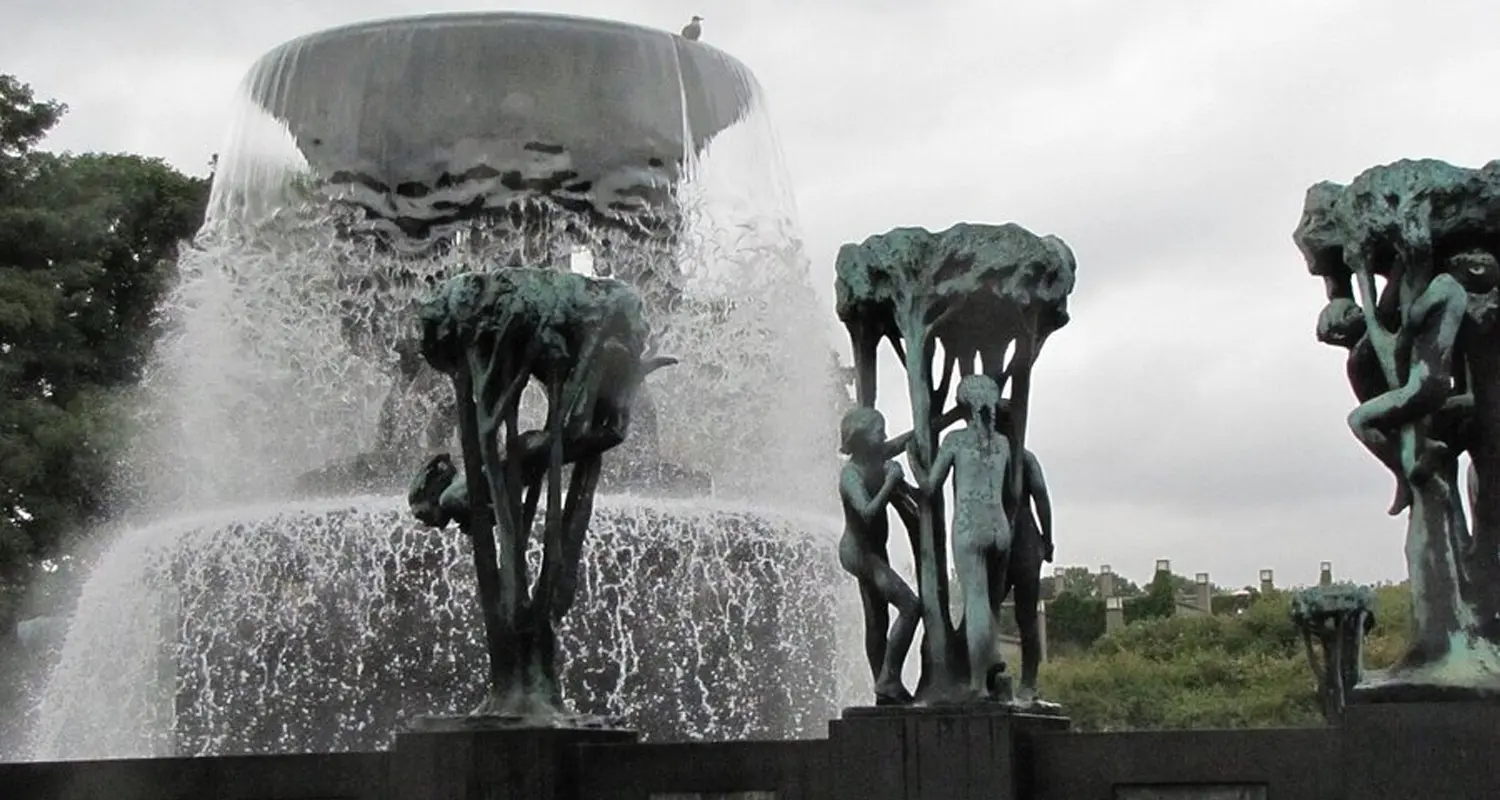
Continue on and you’ll reach the fountain, which feels very different from the bridge. It’s older in concept and far more symbolic in tone.
Six giant men hold up the great basin. Around it stand 20 tree groups representing different stages of life, from childhood through old age to death.
This is one of those spots that gets more interesting the longer you stay. At first it looks decorative. Then it starts to feel a little existential. Then, if you’re like most of us, you quietly decide it’s both.
And then the main event. If this park has a spiritual centre, this is it.
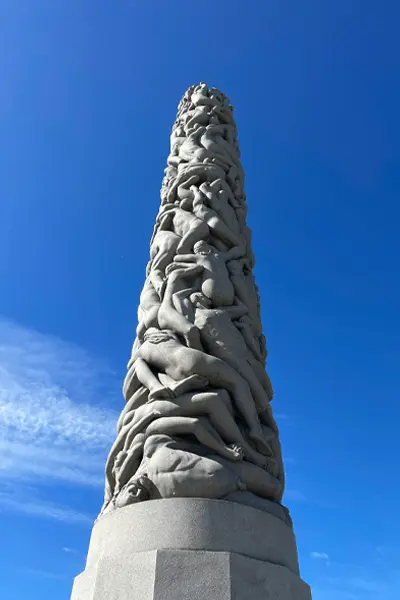
The Monolith stands on the highest point in the grounds, rises 17 metres above ground, and is carved from a single block of stone. It contains 121 human figures intertwined in a vertical struggle — or an ascent, depending on how you read it. People see resurrection, striving, chaos, longing, faith, human closeness, or all of the above.
The stone came from the Iddefjord quarry. The carving itself took 13 years, carried out mainly by three stone craftsmen working by hand.
That last detail changes how you look at it. It stops being “a big sculpture” and starts becoming a monument to sheer stubbornness.
It didn’t start as a park project at all. The starting point was Vigeland’s fountain, originally intended for Eidsvolls plass — the square in front of Norway’s Parliament. That plan never happened. Instead, the fountain became the seed of a much larger artistic vision. In 1924 the city council approved placing the monumental fountain in Frogner Park, and by then the project had already expanded to include the bridge and the Monolith.
Oslo owns all of it because of a deal. In 1919, Gustav Vigeland agreed to donate his entire body of work to the city. In return, Oslo built him a studio — the building that later became the Vigeland Museum.

Go early or late. The best time isn’t necessarily when guidebooks tell you. Summer is beautiful and the grounds are at their greenest — but if you want atmosphere, come early in the morning or in the evening, when the light is lower and the crowds are thinner.
Consider the off-season. In autumn the place feels moodier and somehow more cinematic. In winter, the sculptures can look almost surreal under snow. Because the gates never close, you get to choose the mood you want.

| Info | |
|---|---|
Where |
Inside Frogner Park, Frogner district, west of the city centre |
Opening hours |
Always open, 24 hours a day, all year |
Admission |
Free — no tickets, no booking |
Public transport |
Tram 12 or bus 20; or metro to Majorstuen and walk 5–10 minutes |
Parking |
Paid parking near Monolittveien, Middelthunsgate by Frognerbadet, and Halvdan Svartes gate 50 |
Photography |
Allowed — one of Oslo’s most photographed public spaces |
Drones |
Not allowed |
Time needed |
1–2 hours for the park; add 1 hour for the museum |
If you want the full story, yes.
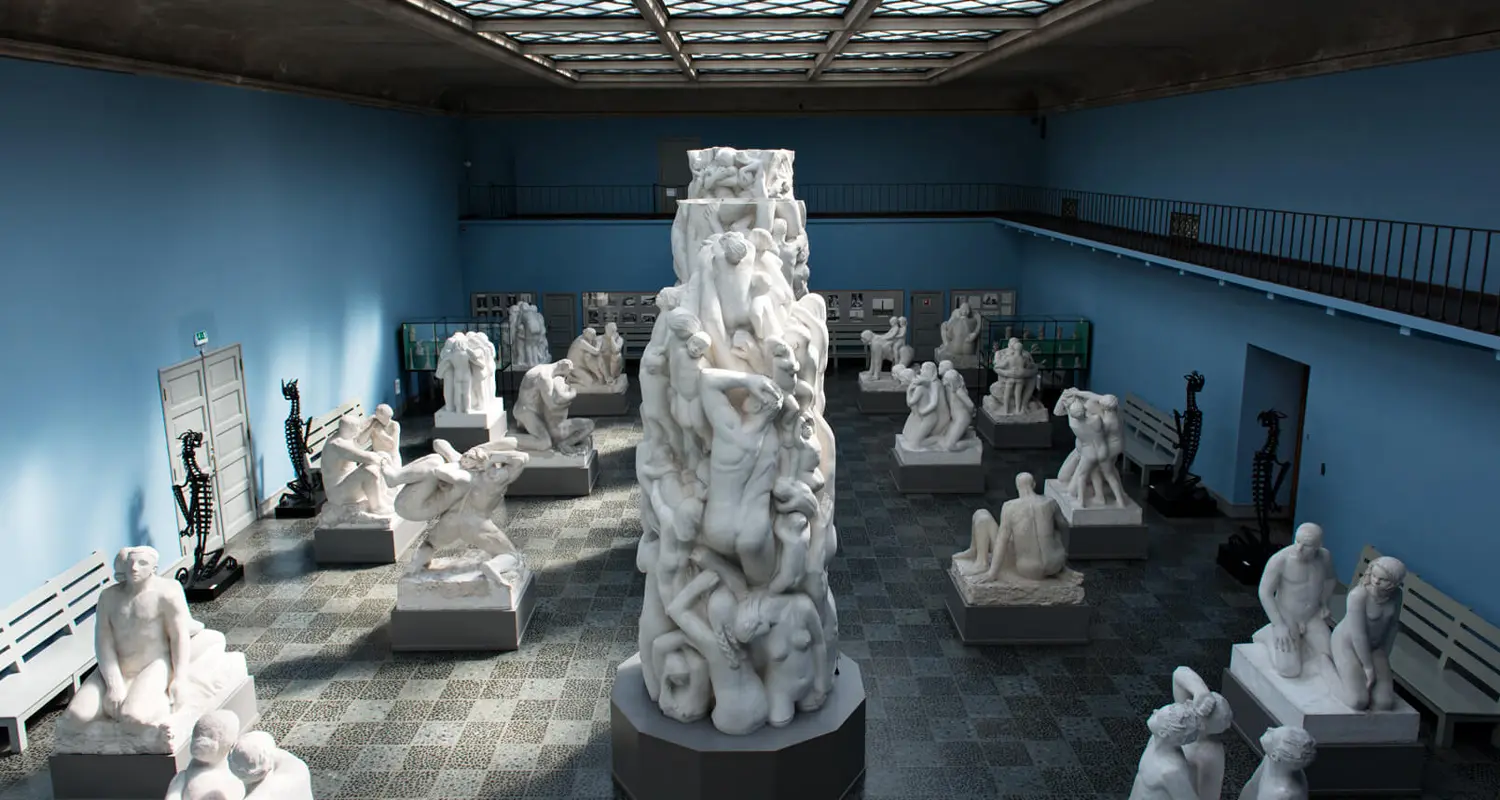
The museum sits just south of the park, in the studio the city built for Vigeland back in 1919.
Its collection includes around 1,600 sculptures, 12,000 drawings and 400 woodcuts — plus the original plaster models the stone carvers worked from.
Walk the outdoor route and you’re seeing the famous greatest hits. Step into the museum and you understand how enormous the artist’s world actually was.
One practical distinction: the park is the free, always-open part. The museum has its own seasonal opening hours and charges admission.
So is it worth it? Absolutely — but not because it’s “one more attraction.”
It works because it’s strange in a very human way. Some sculptures are tender. Some are funny. Some are unsettling. Some make no immediate sense at all. That’s exactly the point.
Come for the famous statues, but stay long enough for the place to stop feeling like a tourist attraction and start feeling like a park — part sculpture garden, part open-air philosophy lesson, part very Oslo afternoon.
And maybe that’s the most local tip of all.
Our Free City Walking Tour is tips-based: free to join, and you tip at the end based on what it was worth to you. It runs about 90 minutes, goes ahead in rain or snow, and meets by the Tiger statue outside Oslo Central Station.
Do it early in your trip. Once you have the city’s story, everything you see afterwards — including Vigeland’s world — makes far more sense.